
Considering Tankless in Eloy? Installation, Flushing and Troubleshooting Explained
A tankless heater heats water only while a tap is open, so it never runs out and takes little wall space. It also asks more of your gas line, vent and water than a tank does. A plumber serving your area can install one, service one that has stopped working, or tell you honestly that a tank suits your home better.
- Installation checked against your gas supply
- Flush and descale service for existing units
- Error codes and no-hot-water faults diagnosed
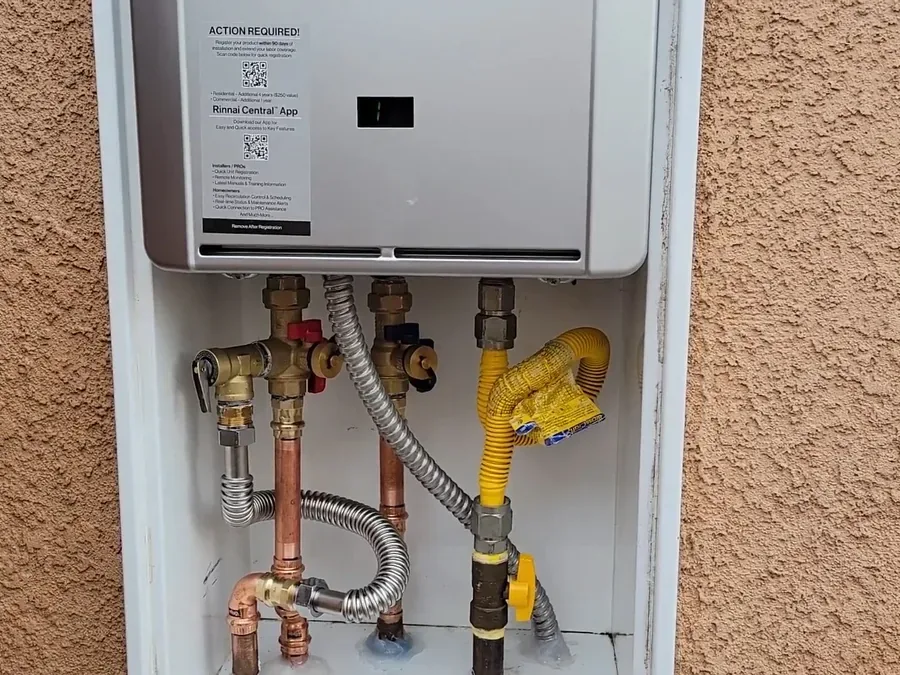
Tankless or tank: how the two really differ in a house here
The headline benefit of tankless is hot water on demand, and the headline cost is the extra preparation that comes before it. Which side wins depends on the house you have and on how much work you are willing to take on up front.
| Question | Storage tank | Tankless |
|---|---|---|
| Where does the hot water come from? | A stored supply that can run out | Heated as it flows, so it does not run out |
| How much wall or floor space? | A tall cylinder in a closet or garage | A small box on the wall |
| What does installation ask for? | Usually a like-for-like swap | Often a larger gas line, new vent and new controls |
| What needs regular care? | An occasional flush | A scheduled flush and descale |
| What happens in an outage? | Stored water stays warm for a while | The unit stops with the power or ignition |
The cost of each option belongs on the cost ranges, since service pages here do not quote figures.
Brand questions come up often, and the plumber can compare what is serviceable locally. Gas versus electric also matters, since an electric tankless unit draws a large load, while a gas unit asks for gas line capacity and a vent.
Gas line, vent and electrical: what the install depends on
A gas tankless unit burns a lot of fuel at once while it heats flowing water. The line that feeds a tank may be too small for that. The vent and the electrical supply for the controls also have to match the new unit.
- Gas line: size and condition checked against what the unit asks for.
- Vent: routed to the outside in the way the manufacturer requires.
- Electrical: a nearby outlet for the controls and fan.
- Water: isolation valves added so the unit can be flushed later.
Southwest Gas supplies gas in Eloy itself. In Picacho and Red Rock, the first question is which company supplies the house, since that company is the one to call about a smell or an interruption.
A gas smell at any point means leaving the building and calling the gas utility or 911 from outside. Do not run the unit again until a plumber has checked it.
Permit and licensing questions for a conversion
Eloy wants a permit before plumbing equipment is swapped out, and the Community Development office publishes a plumbing-only checklist. Gas and vent work on a conversion is inspected against the 2018 codes Eloy adopted.
Source: Eloy Community Development, adopted codes list
A move from tank to tankless usually counts as new work on the gas and vent side, which is where inspectors look hardest. Ask the plumber who files the application and what the inspection will cover on your particular house.
Plumbing contractors answer to the state registrar. Look up the license at roc.az.gov, then request proof of insurance on top of it, because the two are separate things.
Tankless unit not heating? Describe what the display shows
Note any error code, whether hot water cuts out or runs lukewarm, and when the unit was last flushed. That speeds up the visit.
Flushing and descaling: the care a tankless unit needs
Minerals in water collect on the heat exchanger over time. The unit then works harder, runs lukewarm and may throw an error code. Flushing it with a cleaning solution clears the buildup.
How fast scale builds depends on your water. Published sources gave no hardness reading for Eloy, so request the latest quality report from your water provider, or test a sample yourself, before picking a flush interval.
- Ask whether service valves were installed so flushing is possible.
- Keep a note of the last flush date on the unit.
- Mention any change in temperature or flow when you call.
If hard water is the underlying issue, the water softener and filtration page explains what treatment can do.
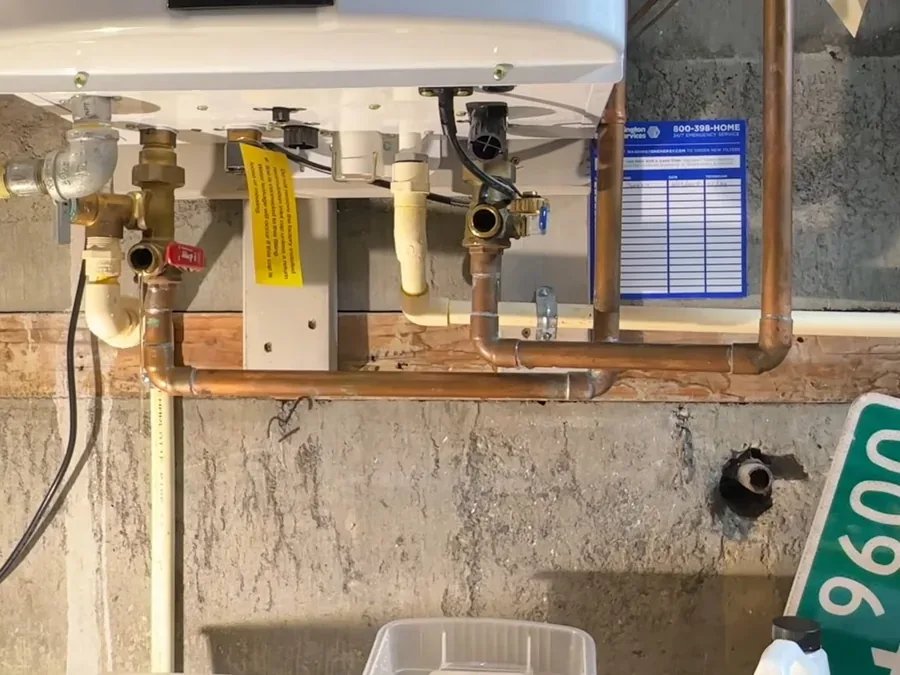
Troubleshooting: lukewarm water, error codes and cold surprises
Most tankless faults show up as a temperature problem or a display code, and a short list of causes accounts for the large majority of them.
| Symptom | Often points to | Who handles it |
|---|---|---|
| Water never gets fully hot | Scale on the heat exchanger or a low gas supply | A plumber, starting with a flush |
| Hot water cuts out, then returns | A flow that is too low for the unit to fire | A plumber, checking filters and fixtures |
| Display shows an error code | A vent, ignition or sensor fault | A plumber, reading the code against the manual |
| No hot water and no display | Lost power or a tripped breaker | You can check the outlet first |
Write down the code before you reset anything, because the code tells the plumber where to begin and saves time once they arrive at the house.
Planning a tankless upgrade? Ask about the gas line first
The gas line, vent and permit decide the project more than the unit does. A short call can sort out what your home needs.
Replacing an old tank with tankless, or the other way back
Some owners move to tankless and later find the preparation and care are more than they wanted. Others keep a tank until it fails and then decide. Both are reasonable paths.
If an existing tank has failed, the replacement choices are laid out under tank replacement choices. If the tank is only misbehaving, repairing a tank heater covers the usual faults.
Whichever way you lean, ask for both options in writing, including what each one needs from your gas line and vent.
Who should think twice about tankless, and who should lean toward it
Tankless suits a household that wants endless hot water, has wall space and has a gas line that can be enlarged without a large project. It also suits owners who do not mind a scheduled flush every so often.
A tank may suit better when the gas line would need a long and costly new run, when the vent path is awkward, or when the household wants the simplest possible unit with the least upkeep. Neither answer is wrong, and a plumber who lays out both honestly is worth listening to.
- Lean toward tankless: limited floor space, a very high hot water demand, a gas line that is easy to upsize.
- Lean toward a tank: a tight budget for preparation, a long vent route, little interest in regular maintenance.
Tankless water heater questions answered
Is a tankless water heater better than a tank?
Neither is better in every home. Tankless saves space and does not run out. A tank is simpler to install and care for. Your gas supply, vent route and hot water habits decide it.
How often does a tankless heater need flushing?
That depends on the water and on the manufacturer. Ask your water provider for its quality report, then follow the maker's schedule or ask the plumber to set one.
What should I do if my tankless unit shows an error code?
- Write down the code.
- Check that the gas valve is open and the breaker is on.
- Call a plumber and give them the code.
Can I install a tankless heater myself?
It involves gas, venting and a permit, so it should be done by a licensed plumbing contractor. Unpermitted gas work can cause trouble at inspection and with insurance.
Steady hot water in Eloy, on demand
Licensed and insured plumbers install, flush and repair tankless water heaters in Eloy. Call now for a unit that has stopped, or use the contact page to plan an upgrade.